
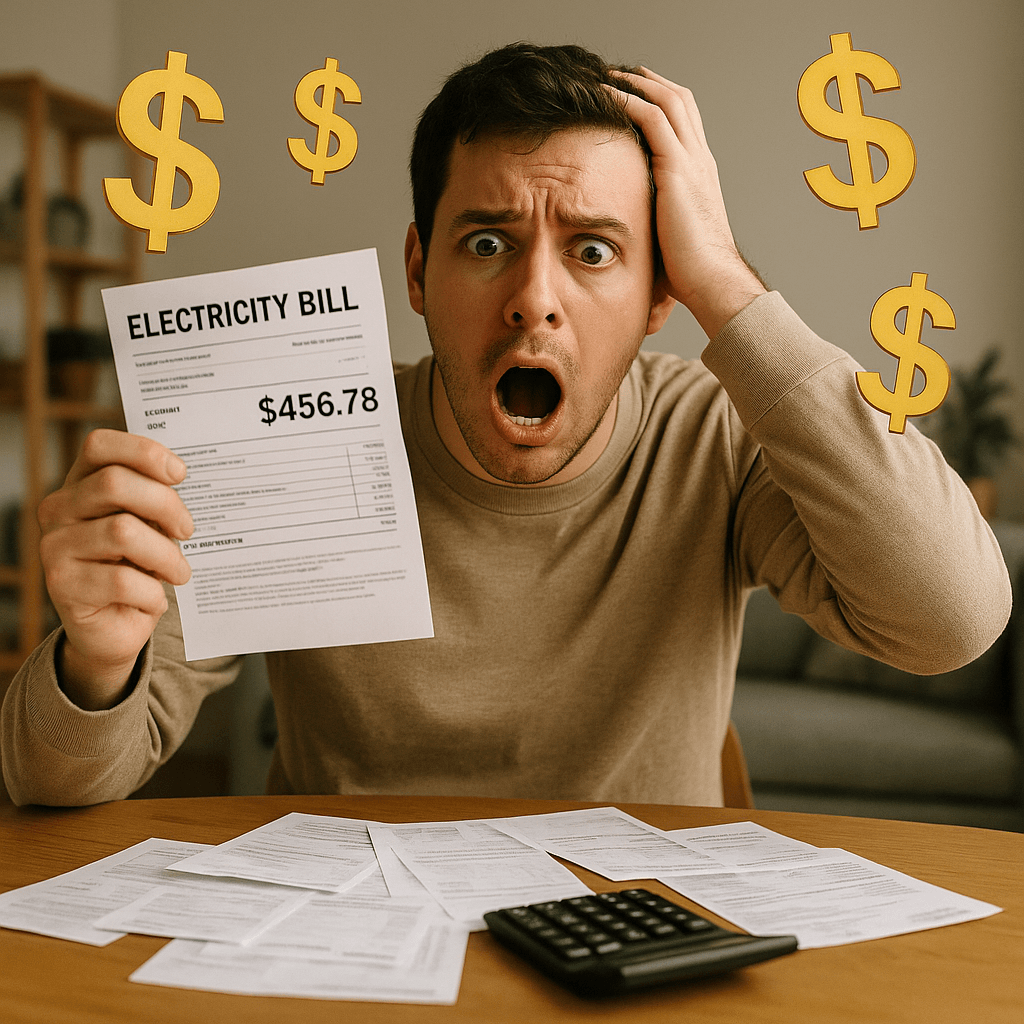
When the board approved the EV charger installation, everyone felt good about it. Tenants had been asking for it. The sustainability report needed it. The budget had room for it. Six months later, the energy bills told a different story.
This is a conversation happening in property management offices more often than the industry publicly admits. The chargers are installed, the tenants are happy, and then quietly, across billing cycle after billing cycle, the electricity costs climb in ways that nobody budgeted for and nobody can immediately explain.
The explanation, when it finally surfaces, is almost always the same. Peak demand.
Here is how it works. Commercial buildings operate under contracted capacity agreements with their energy providers. That contracted limit defines how much power the building can draw at any given moment without triggering excess demand charges. For most buildings, that limit was set years ago based on historical consumption patterns from a world where the car park drew almost no electricity.
EV chargers changed the equation entirely.
When multiple vehicles plug in simultaneously during high-occupancy periods, the combined charging load stacks on top of whatever the building is already consuming. HVAC running at full capacity. Elevators in morning rush mode. Lighting, servers, kitchen equipment. Add eight to twelve charging sessions to that baseline and contracted capacity limits that looked comfortable suddenly look optimistic.
The breach happens fast. The penalty does not announce itself. It appears three weeks later on an invoice line that most facilities managers have to look up twice before they understand what they are reading.
What makes this particularly frustrating is that the problem is not the EV chargers themselves. Electrification of commercial transport is the right direction. The problem is the assumption that adding charging infrastructure is a passive act, that you install the hardware and the rest takes care of itself.
It does not. Because EV demand is not static. It is behavioral. It clusters around arrival patterns, meeting schedules, and weather. It interacts with building systems in ways that no fixed rule or manual schedule can fully anticipate. And as fleet penetration grows across a building’s tenant base, the clustering intensifies.
The buildings paying the smallest penalty bills right now are not the ones with fewer chargers. They are the ones with smarter load management. They have systems that understand both sides of the equation simultaneously, the EV demand coming in and the building load already running, and coordinate between them in real time.
That coordination is not complicated in principle. It just requires intelligence that most building energy systems and most EV platforms were not designed to provide. They were built separately, for separate problems, and neither was built for the moment when a car park started drawing meaningful electricity.
That moment has arrived for most commercial buildings. The ones still treating it as a future problem will find it on their next invoice.
The bill nobody warned you about has already been sent.
Add a Comment